Unlocking High-Precision CNC Machining: The Precision Magic of Manufacturing
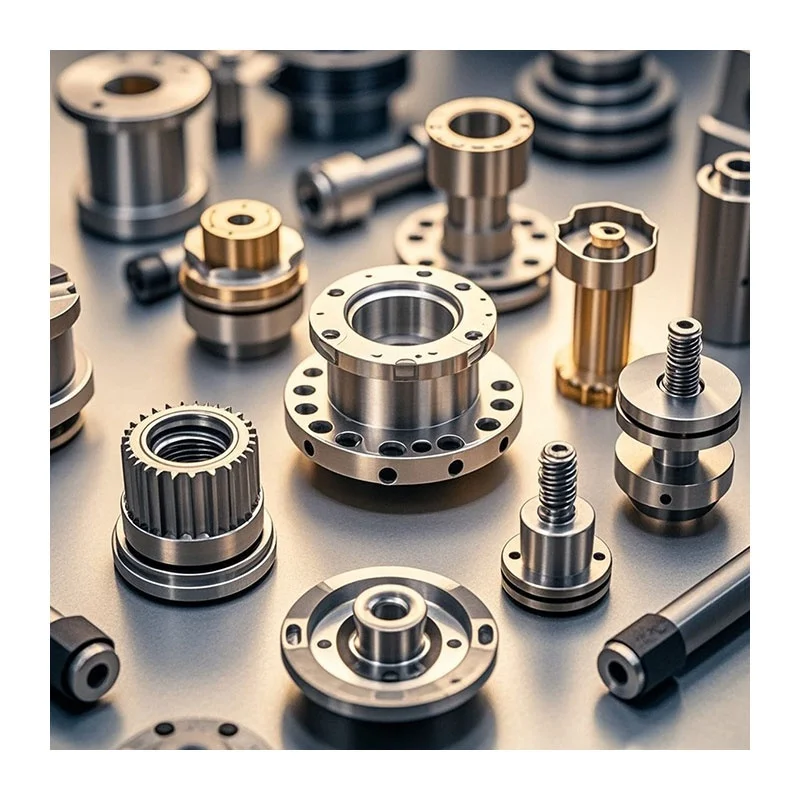
High-Precision CNC Machining: The “Precision Revolution” in Modern Manufacturing
From the engine blades of the J-20 fighter jet to artificial joints implanted in the human body, behind these precision components critical to national security and human health lies a core technology — high-precision CNC (Computer Numerical Control) machining. It is not only the foundation of manufacturing but also the “precision revolution” driving industrial advancement.
I. From Military Secret to Industrial Cornerstone: The Evolution of CNC Machining
The birth of CNC technology originated from the demand for complex components in the mid-20th-century military industry. In 1952, the world’s first CNC machine tool was born at the Massachusetts Institute of Technology (MIT) in the United States. This machine used a control system composed of vacuum tubes, achieving automatic control of machine tool movement and marking the dawn of the CNC machining era.
Over the following decades, the technology evolved rapidly: from vacuum tubes to transistors, to integrated circuits, and finally to today’s Computer Numerical Control (CNC) systems. Control accuracy and stability continuously improved, and machine tool structures were optimized, greatly expanding processing capabilities and efficiency. High-precision CNC machining represents a further upgrade on this foundation, developed to meet even more stringent accuracy requirements.
II. What is High-Precision CNC Machining? The Synergy of Four Core Systems
Simply put, it is the process of using computer programs to control machine tools for high-accuracy part manufacturing. It’s like following a pre-set GPS route precisely, but here, the “vehicle” is the machine tool’s cutter, and the “driver” is the computer program.
This system relies on the seamless collaboration of four key components:
High-Precision Machine Tool: The foundation, featuring components like beds made of high-strength cast iron (stress-relieved) and high-accuracy guides (rolling or hydrostatic) to ensure stability and minimize friction.
Control System: The “brain,” using powerful 32/64-bit microprocessors for fast calculations, high-accuracy control, and multi-axis coordination for complex parts.
Measurement System: The “eyes,” crucial for maintaining quality. It includes:
In-process Measurement: Real-time feedback during machining for immediate adjustments.
Post-process Measurement: Final verification using equipment like CMMs (Coordinate Measuring Machines) and laser interferometers.
Tooling System: The “scalpel,” utilizing high-strength, wear-resistant materials (e.g., carbide, ceramic) with precision grinding and coatings to maintain accuracy at high cutting speeds.
III. The Unmatched Advantages: Why It Reigns Supreme
Miraculous Precision: While conventional machining operates within 0.1-0.01 mm tolerances, high-precision CNC achieves 0.001 mm or even finer—a fraction of a human hair’s width. This is critical for components like engine blades, where minimal deviation impacts performance and safety.
Leap in Efficiency: It enables full automation and features like automatic tool changers, drastically reducing non-cutting time. Jobs taking weeks with conventional methods can be completed in hours.
Mastery of Complex Geometries: Through multi-axis (e.g., 5-axis) control, it effortlessly machines intricate curves and structures—like complex turbine disk slots or mold cavities—that are nearly impossible with traditional methods.
IV. Key Application Fields: Where Precision Matters Most
Aerospace: Indispensable for manufacturing critical components like engine blades, casings, and turbine disks. It ensures extreme dimensional accuracy and surface quality, enhancing performance and reliability, often enabling complex single-piece structures that reduce assembly points.
Automotive Manufacturing: Widely used for key parts like engine blocks, cylinder heads, crankshafts, and transmission gears. High precision directly translates to improved engine performance, fuel efficiency, reduced noise, and longer component life.
Medical Devices: Vital for implants (e.g., artificial joints customized from patient data) and diagnostic equipment (e.g., CT scanner components). Accuracy here is paramount for patient outcomes and diagnostic reliability.
V. Navigating Challenges and Forging Breakthroughs
The technology faces hurdles, met with continuous innovation:
Challenge: Thermal deformation of machines during operation.
Solution: Advanced cooling systems and real-time thermal compensation technology.
Challenge: Tool wear affecting accuracy and cost.
Solution: Development of harder tool materials (e.g., CBN, ceramics) and real-time wear monitoring systems.
Challenge: High initial investment costs.
Solution: Technological advances lowering costs, economies of scale, and shared manufacturing models to improve equipment accessibility, especially for SMEs.
VI. Future Outlook: The Trajectory of High-Precision Machining
The future points towards intelligent, networked, and green manufacturing:
Intelligent: Machines equipped with advanced sensors and AI will self-perceive, make decisions, and auto-adjust parameters. AI will also enable predictive maintenance, minimizing downtime.
Networked: Interconnected CNC systems will form smart manufacturing networks, enabling remote monitoring, real-time production management, and supply chain synergy.
Green Manufacturing: Focus will increase on eco-friendly coolants/lubricants, process optimization for higher material utilization, waste reduction, and energy-efficient drives and controls.